
 Русский
 Español
 عربي
عربي Tiếng Việt
 Türkçe
1. How Does a Pallet Jack Side Guard Work?
The side guard functions as a physical barrier mounted on the sides of the pallet jack forks. It prevents items—especially those that are unstable, loose, or irregularly shaped—from sliding off during transport. By containing the load within the fork area, it reduces the risk of accidents, product damage, and workplace injuries.
2. Differences Between Side Guards and Other Protective Devices
Unlike top guards or overhead guards, which protect from falling objects, side guards focus on lateral stability. They are also distinct from fork extensions or attachments designed for load expansion. Side guards are specifically engineered for containment rather than load support or vertical protection.
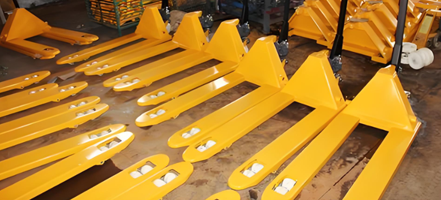
3. Applications of Pallet Jack Side Guards
-
Warehousing and logistics centers
-
Manufacturing and assembly lines
-
Retail stock rooms and distribution hubs
-
Food and beverage handling
-
Pharmaceutical and electronic goods transport
-
Any environment where unstable or small items are moved on pallet jacks
4. Advantages of Using Side Guards
-
Enhanced Safety: Reduces risk of load shift and operator injury.
-
Product Protection: Minimizes damage to goods during transit.
-
Improved Efficiency: Allows faster and more confident movement of unstable loads.
-
Versatility: Compatible with various pallet jack models and load types.
-
Cost-Effective: Low maintenance and easy to install.
5. Common Materials Used
-
Steel: Durable and strong, ideal for heavy-duty environments.
-
Aluminum: Lightweight and corrosion-resistant, suitable for food and chemical industries.
-
Plastic/Polyethylene: Lightweight, non-corrosive, and often used in cleanroom or light-duty settings.
-
Mesh or Wire Panels: Provide visibility and airflow while offering protection.
6. Performance and Durability
High-quality side guards are designed to withstand impact, vibration, and environmental factors such as moisture or temperature changes. They should be tested for load containment, structural integrity, and compatibility with standard pallet jacks. Regular inspection for damage or wear is recommended to ensure ongoing performance.