
 Русский
 Español
 عربي
عربي Tiếng Việt
 Türkçe
Working Principle
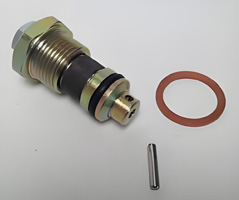
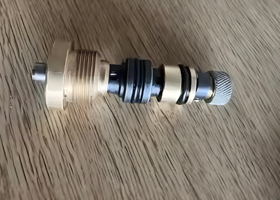
The pump core operates by manually pressing the handle to drive the hydraulic cylinder, converting mechanical energy into hydraulic energy, which pushes the piston upward to achieve smooth lifting of the forks. Its internal precision valve system ensures stable pressure and safe operation.
Differences from Traditional Systems
-
Higher Efficiency: Modern pump cores feature optimized flow channels for faster lifting and easier operation.
-
Longer Lifespan: Wear-resistant materials and sealing technology reduce leakage and wear.
-
Easier Maintenance: Modular design allows for easy disassembly and part replacement.
-
Enhanced Safety: Built-in overload protection and anti-drop mechanisms.
Applications
The pump core is widely used in warehousing and logistics, factory workshops, ports, supermarkets, and shelf management, suitable for various pallet handling tasks.
Advantages
-
Efficient & Stable: Delivers consistent and reliable lifting power.
-
Energy-Saving & Eco-Friendly: No electricity required, purely manual operation.
-
Compact Structure: Small size and lightweight for easy integration and maintenance.
-
Strong Adaptability: Suitable for harsh environments such as high/low temperatures, dust, and humidity.
Material Characteristics
The pump body is often made of high-strength alloy steel or engineering plastics, with key seals using oil-resistant rubber or polyurethane to ensure pressure resistance, wear resistance, and corrosion resistance. Some high-end pump cores feature surface hardening treatments for extended lifespan.
Performance
-
Load Capacity: Typically supports loads of 2.5 to 5 tons.
-
Lifting Speed: Each press lifts approximately 10-15mm.
-
Pressure Resistance: The hydraulic system operates stably within 10-20MPa.
-
Lifespan: Normal use lasts over 5 years, extendable to 8 years with proper maintenance.